




Biblio

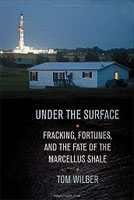

Fast Food Energy: Mom and Dad’s Great American Gas Rush.
Neil Zusman
Wilber, Tom. Under the Surface: Fracking, Fortunes and the Fate of the Marcellus Shale. Ithaca: Cornell University Press, 2012. Print.
Hydrofracking’s proposed a massive industrial transformation on a huge swath of the rural Northeastern U.S. and has divided communities and sparked an intense public debate touching on our method of economics, law making and enforcement. The book under review, Under the Surface, is one of less than 100 books published on the subject of hydraulic fracturing or fracking. Author Tom Wilber covered the environmental beat for Binghamton, N.Y.’s Press & Sun Bulletin.
Even George W. Bush said in a Presidential speech, that "Americans are addicted to oil". In my opinion, we are also addicted to natural gas and it is being pushed by the industry and abetted by govenments. A Theory of Rational Addiction (1988) by economists Gary Becker and Kevin Murphy, argued that shooting heroin is a logical choice when all you're giving up is a crappy existence. 1
Time’s humorist, Joel Stein, wrote about “Instant Gratification”. 2 Has everything in our culture become humorous? The controversy over how fast to develop the natural gas that lies beneath the Northeastern U.S. has not had the privilege of humor that Stein brings to his observations on self-gratification, or his penchant to deliver it in his own narcissistic, Seinfeld-esque 'cult of personality' idiom. Nevertheless, the fatter we all get craving our Big Macs, carbonated corn syrup, and drugs; the richer a few of us will become. The longer we are told to believe that hydrofracking is, in Terry Engeldr's words, 'a Christmas present for America', the more we will accept it as inevitable.
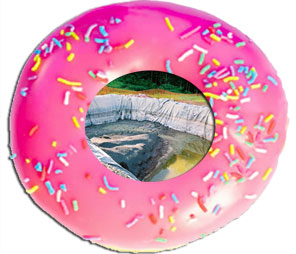 3
3
It took an insider at the cigarette industry to finally confirm what the Surgeon General was trying to tell us 30 years earlier. And yet, the labels and warnings and widespread anti-smoking campaigns will not keep me from my craving. I may need a cigarette today and I am sure that I can get it. I don’t have that app that shows me what I will look like when I’m 80. Stein’s app would change my picture of the 80 year old me posted electronically on my fridge each time I eat a jelly glazed doughnut. The app for the cigarette smoker – would likewise factor the algorithms of that gratification. And our energy craving…trouble is, the math guys don’t have the data for that one.
In fact, so much of this stuff has been covered up and fabricated, that it’s hard to get any real data at all. The University of Pennsylvania had to eat crow over “The Penn State Report”. 4
“Graham Spanier, president of the university received a letter from an advocacy group complaining that the so-called Penn State report confused academic research with propaganda by its industry sponsors.”
…Spanier ordered William Easterling, dean of the college that published the report, to address the complaint. A few weeks later, Saxton (president of the Board of Responsible Drilling Alliance) received a reply from Easterling conceding that an internal review “found flaws in the way the report was written and presented to the public.” The fact that the report failed to identify its sponsor was a “clear error”. 5(p98)
 6
6
None of this stuff is illegal though. It’s a free market. As if that were everything.
Investors are satisfied with the way a cigarette or sugar doughnut or Big Mac works on our brain. Is that funny? Tom Wilber asks if will it be boom or bust and cites the work of Janette Barth.5(p101) Susan Christopherson and Ned Rightor, in "How Should We Think About the Economic Consequences of Shale Gas Drilling?" 7 have also wondered about that in a Park Foundation funded study. Who to believe?
Will our children grow up to be gas engineers or scholars, musicians or maids in the halls of the energy elite? We want them to be prepared. Will they be able to compete in the free market? And what about nature? What is a life worth? The EPA has put a valuation on it. 8 It’s worth about 7.9 million dollars. Is that chump change?
Humor is a challenge that may not be begged of Mr. Wilber’s reporting. He never intended his book to be funny. He gets both ends of the story on flowback, which are recovered fracturing fluids. According to the EPA’s web page, “Hydraulic Fracturing Background Information”, 9 disposal options for flowback include discharge into surface water or underground injection. Treatment is typically performed by wastewater treatment facilities. How companies deal with the disposal of the millions of gallons per well of waste-water produced in the gas extraction process is apparently well-known and regulated, but Wilber reveals that
“…There was something else that bothers Ken [Ely]. He hadn’t anticipated the wells on his land would produce so much waste. This included not only the spent chemical solution used to stimulate each well, but tens of millions of gallons of brine and whatever else came up from the holes. The flowback was supposed to be treated and disposed of at plants equipped to handle it, yet nobody could tell Ken exactly where those plants were.
…When I [Wilber] asked regulators where the flowback was being treated, they told me it was a question for the companies. When I asked company representatives, they told me, “It’s all regulated.” 5(p86)
Now that’s funny.
He interviewed Terry Engelder, who released the potential of the Marcellus Shale in the “Penn State Report”. He estimated there are 500 trillion cubic feet of natural gas waiting to be discovered. By Tony Ingraffea’s calculations, the Cornell engineering professor who has criticized the rush to develop the gas resource so quickly, it will take 400,000 wells to get to it, with each well requiring 5 million gallons of fresh water. That’s 2 trillion gallons of water going in, and somewhat less coming out that would need to be trucked, disposed of, or treated, or injected into the ground. Cayuga Lake, which is 40 miles long, 2 miles wide, and has a maximum depth of 435 feet, contains a total of 2.5 trillion gallons of water. 10
Wilber’s book reminds us how the facts of the water draw are not just about measuring the water usage and arguing those numbers, the huge impact that hundreds of thousands of truck trips on county roads will have on rural communities will be catastrophic, notwithstanding the composition of the wastewater itself.
The Marcellus Rush is all humorless self-indulgence, fancy landmen with Texan drawls and cowboy hats who look like your grandfather; engineers and scholars who think they’ve discovered the next big thing; and then the one after the big thing that will save us from the next big thing. Wilber gives us the Terry Engelder character, larger than life:
“He thought of the Marcellus discovery as a Christmas present for America; and on his drive home, after days of thinking about the possibilities, he was given to playing the Radetzky March by Johann Strauss…” 5(p96)
Somewhere in Washington, EPA Director Lisa Jackson’s speechwriter, tunes her Cello, and begins to play Bach’s Solos for Cello. Have you listened to those speeches? 11
If my life is so crappy that I don’t care if I smoke a pack a day or shoot heroin, whose job is it to stop me? I can buy any brand I want. Some brands even offer healthy alternatives. If I live in a poor neighborhood and can’t get a supermarket nearby, the government might have a program to encourage a market to open so I won’t have to live on Wendy’s or Big Macs. We like this stuff, we eat it to obesity and vote for it with our dollars; but the U.S. government tells me that I need a better diet, more choices. When it comes to energy, I can use natural gas, or… natural gas. I can put gasoline in my tank, or gasoline… People are buying electric cars. Maybe the trend is shifting.
“I asked Hanger where natural gas fit into his vision of green energy. It was better than coal, he said, the mining of which destroys mountaintops and the burning of which produces CO2 gases and mercury that accumulate in the food chain. In his view, a surge in the development and demand for alternatives, including solar panels, is imminent, due mostly to China’s burgeoning interest in the industry. “The baby has been born,” he said. "China is intent on building solar panels for the world. Those changes will come and those changes will be rapid – less than five years." 5(p204)
The cult of personality, as portrayed so eloquently in this important book, may be in need of a sense of humor and the self-deprecating sarcastic one-liner to make them marketable, but they have brought out our need to think about energy, the best thing our planet of humankind needs.
At one end of the spectrum were characters who
“…embraced the industry as an expression of old-fashioned free enterprise…At the other end of the spectrum were those who saw the industry as a relic of grandfather clauses and cronyism that dated to a period of predatory exploitation, when fantastical deals were pitched by door-to-door peddlers, manufacturing waste was buried in lagoons on private property, and unions were nonexistent. The middle ground was occupied by an untold number of consumers used to cheap plentiful energy, and property owners, who had their worries but also were able to calculate how much a mineral rights lease might be worth.” 5(p104)
Wilber draws the sides in as divisive and rude a public debate as one might expect to see on Fox TV. I don’t know why it hasn’t been picked up as a reality show yet, but it may be soon. Stu Gruskin, former asst. head of the NYS DEC admires civil discourse on his blog.12 He sounds like a sweet anachronism. I bet each side of this debate would like to call each other “big fat idiots” the way Al Franken tells it in his book on Rush Limbaugh13 or in Lies – and the Lying Liars who Tell Them, investigating the fabrications published by Bill O’Reilly, Ann Coulter, and Sean Hannity. One of Franken’s big ideas in Lies is that even good journalists contribute to the lie, taking at face value the reporting of their colleagues and re-iterating the report without investigation. 14 Wilber investigates.
References
1. Murphy KM, Becker GS. A Theory of Rational Addiction. Journal of Political Economy. 1988;96(4):675-700.
2. Stein J. "Instant Gratification." Time. 2012. Available at: http://www.time.com/time/magazine/article/0,9171,2113162,00.html [Accessed May 2, 2012].
3. Zusman N. Mashup of Hubbard 1, 6-H, 5-H, Springville, PA by Helen Slottje and Homer Simpson Doughnut. 2012. Available at: /frack_files/frac-pond-Helen-Slottie.jpg [Accessed April 28, 2012].
4. Glass I. This American Life Search Archive 440: Game Changer Transcript. Available at: http://www.thisamericanlife.org/radio-archives/episode/440/transcript [Accessed May 2, 2012].
5. Wilber T. Under the surface : fracking, fortunes and the fate of the Marcellus Shale. Ithaca: Cornell University Press; 2012.
6. Guariglia J. Cancer - Rogue Cells | Photo by Justin Guariglia. Available at: http://science.nationalgeographic.com/science/health-and-human-body/huma... [Accessed May 2, 2012].
7. Christopherson S, Rightor N. Working Paper Series: A Comprehensive Economic Impact Analysis of Natural Gas Extraction in the Marcellus Shale | How Should We Think About the Economic Consequences of Shale Gas Drilling? 2011. Available at: http://www.greenchoices.cornell.edu/downloads/development/marcellus/Marc....
8. Appelbaum B. "A Life’s Value May Depend on the Agency, but It’s Rising." The New York Times. 2011. Available at: http://www.nytimes.com/2011/02/17/business/economy/17regulation.html?_r=... [Accessed February 17, 2011].
9. U.S. Environmental Protection Agency (EPA): Office of Ground Water and Drinking Water OW. U.S. Environmental Protection Agency (EPA): Hydraulic Fracturing Study (2010-2012). Available at: http://water.epa.gov/type/groundwater/uic/class2/hydraulicfracturing/ind... [Accessed April 13, 2010].
10. Cayuga Lake Watershed Network. 2005. Available at: http://www.cayugalake.org/network/faq.php [Accessed May 2, 2012].
11. Jackson L. Lisa P. Jackson, EPA (lisapjackson) on Twitter. 2010. Available at: http://twitter.com/lisapjackson [Accessed January 11, 2011].
12. Gruskin S. Stuart Gruskin - Google+ - It's refreshing to read about public officials that are... Stuart Gruskin - Google+. 2011. Available at: https://plus.google.com/115541440669480452148/posts#11554144066948045214... [Accessed May 2, 2012].
13. Franken A. Rush Limbaugh is a big fat idiot and other observations. New York: Delacorte Press; 1996.
14. Franken A. Lies : and the lying liars who tell them : a fair and balanced look at the Right. New York: Dutton; 2003.
See also: Wilber, Tom. “Shale Gas Review.” Shale Gas Review, 2011. http://tomwilber.blogspot.com/.

Wikileaks has embarrassed the U.S. and a member of the House Homeland Security Committe, Candice Miller (R-Mich) has said, "It is time that the Obama administration treats WikiLeaks for what it is — a terrorist organization whose continued operation threatens our security."
I propose that this story about peak oil is a leak fed by the U.S. to drive up the price of oil in the long term.
It is the effect of oil consumption on our environment, not our economy, that is best considered around our mashup meanderings of this story. The toll that greenhouse gases are taking on human health and climate change has, by some accounts, already killed millions of children worldwide. Even is there were an endless supply, burning oil and gas has serious health effects and while scientists and economists trade models, the innocent suffer outside the lens of for-profit media. (Neil Zusman, 2011-02-19).
This report about a Guardian article by Anneneberg | USC introduces us to a lively source of student journalism.
The world may run out of fossil fuels far earlier than expected and experience a climb in the price of oil, as data in newly leaked WikiLeaks cables suggest that Saudi Arabia has fewer oil reserves than previously believed.
The latest confidential cables to be released come from the American embassy in Saudi Arabian capital Riyadh, and claim that Saudi oil reserves were overstated by as many as 300 billion barrels, or nearly 40 percent of its actual reserves.
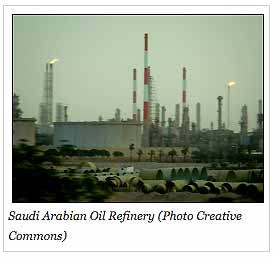
The former head of exploration at Saudi oil monopoly Aramco, Sadad al-Husseini, stated in the classified cables that “peak oil” – the point at which global production and, thus, consumption of oil reaches its highest possible level – may come as early as 2012.
Read between the lines, see these links on Fracking Resources Guide:
Climate Co-benefits and Child Mortality Wedges | Fracking Resource Guide.
The Deep Hot Biosphere : The Myth of Fossil Fuels
Probe Earth's Interior with Advanced Radiation Sources
Center for Dark Energy Biosphere Investigations (C-DEBI)
See: Appelbaum, Binyamin. “A Life’s Value May Depend on the Agency, but It’s Rising.” The New York Times 16 Feb. 2011. Web. 17 Feb. 2011.
See also: Associated Press. "How to value life? EPA devalues its estimate: $900,000 taken off in what critics say is way to weaken pollution rules." 2008-07-10.

One of the most glaring omissions during Obama’s State of the Union address was the acknowledgement of climate change. As the Senate and House return to Capitol Hill both sides are gearing up to attack the existing tool in place to address greenhouse gases – the Clean Air Act...
...Instead of addressing these threats to the Clean Air Act, Obama shifted the focus to the need for “clean energy” – stating the goal of an 80% clean energy sector by 2035 – a seemingly positive objective if the energy sources he referred to were actually clean. But in this case, dirty energy by any other name is still dirty energy. Obama’s clean energy plan includes dirty technologies such as nuclear reactors, coal, natural gas and biomass. Learn more here.

About Us
Corporations have their lobbyists in Washington, D.C.
The people need advocates too.
We have successfully challenged the abusive practices of the pharmaceutical, nuclear and automobile industries, and so many others. We are leading the charge against undemocratic trade agreements that advance the interests of mega-corporations at the expense of citizens worldwide.
We have five policy groups: our Congress Watch division, the Energy Program, Global Trade Watch, the Health Research Group and our Litigation Group. Learn more about them here.



Kentucky ranks dead last in healthy behavior, and 49th in overall well-being, emotional health, and physical health (behind WV of course). More mountaintop removal will only make these problems with the health of Appalachian people even worse. Its hard to get worse than worst, but Hal Rogers is doing his darndest.
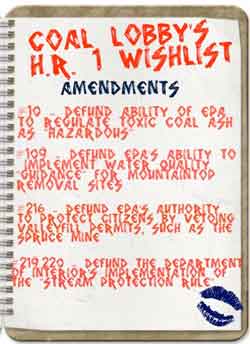
Yesterday the coal lobby added a litany of dangerous amendments to HR 1 that had nothing to do with spending, but instead are aimed at removing citizen protections from mountaintop removal.
Why Americans Should Oppose Rep Hal Rogers’ Federal Budget (HR 1)
Appalachia saw several new threats arise in Congress yesterday, as Representatives of Congress introduced bad amendment after bad amendment after bad amendment to the already dangerous Budget Resolution (H.R. 1) that is due to be voted on as soon as tonight. In all, more than 400 amendments were filed yesterday and an additional 180 have been filed today. Many of them reflected Congressman Hal Rogers’ own sentiments about how to govern – disregarding citizen protections and sound science, while encouraging the complete and utter deregulation of large polluting industries that are a threat to public health and well-being. We’ve seen what happens when Mr. Rogers’ policies are put into place, as they have been in eastern Kentucky for decades.
Of the 435 Congressional districts, Rogers’ district (KY-05) is #1 in mountaintop removal and stream damages by the coal industry. But it is also DEAD LAST in well being.
Hal Rogers’ neighborhood may be “dead first” in mountaintop removal, but out of the 435 congressional districts in the United States, his ranks:
- 435th in life expectancy (dead last)
- 435th in physical health (dead last)
- 435th in overall well-being (dead last)
- 435th in emotional health (dead last)
See: iLoveMountains
See: GOP Budget Amendments Would Destroy Health, Economy, Planet.


Like many villages in China’s industrial heartland, Qiugang — a hamlet of nearly 1,900 people in Anhui province — has long suffered from runaway pollution from nearby factories.
In Qiugang’s case, three major enterprises with little or no pollution controls churned out chemicals, pesticides, and dyes, turning the local river black, killing fish and wildlife, and filling the air with foul fumes that burned residents’ eyes and throats and sickened children.
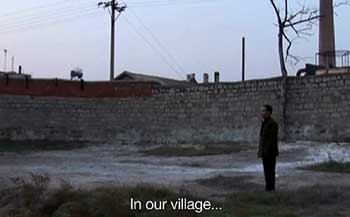
This exclusive e360 video report, “The Warriors of Qiugang” — co-produced by Yale Environment 360 — tells the story of how the villagers fought to transform their environment, and, in the process, found themselves transformed as well.
The 39-minute video focuses on an unlikely hero — farmer Zhang Gongli, now almost 60, who leads the village’s fight to shut down the chemical plant. Soft-spoken and easy-going, but with a backbone of steel, Zhang — who has only a middle-school education — quickly learns how to use China’s more stringent federal environmental laws to put pressure on the factory owners and their cronies in local and regional government.
“We are sorry to be born in this place,” says Zhang, “but we had no choice. This was forced upon us.”
The camera follows Zhang as he deals with threats from local thugs, rallies his neighbors, and travels to Beijing, where he attends a heady meeting of China’s emerging environmental movement. Zhang — like so many other Chinese — finds himself plunged into a new and wholly unfamiliar world.
The Warriors of Qiugang, was nominated for a 2011 Academy Award for Best Documentary (Short Subject).
See: A Life’s Value May Depend on the Agency, but It’s Rising

The U.S. Chamber of Commerce is controlled by Big Polluters, poisons politics with its dirty money, and opposes every single effort to curb climate pollution.
“The U.S. Chamber Doesn’t Speak For Me” campaign is designed to expose the Chamber’s dirty business in Washington D.C., and discredit their efforts to delay the kind of bold action we need to create a clean energy economy and a safe climate future.
For more information, check out their Frequently Asked Questions page.
See: Eaarth: Making a Life on a Tough New Planet | 350.org Founder Bill McKibben
See: As climate crime continues, who are we sending to jail? Tim DeChristopher?

A chewy candy bar with the ironic name Toxic Waste Nuclear Sludge has been recalled due to concerns that the bars contain elevated levels of lead. Here is the press release from the U.S. Food and Drug Administration. No this is not a Yes Men art work.
Candy Dynamics, distributors of Toxic Waste® Nuclear Sludge® chew bars, has issued a recall of all lots, sizes and flavors of Nuclear Sludge® due to levels of lead that exceed the FDA standard. In addition, the company is discontinuing Nuclear Sludge®. Click here for more information.
Maureen Reilly of the Canadian listserv Sludge Watch commented:
The Toxic Waste candy that was recalled had only 0.24 ppm lead.
The EPA allows 400 ppm lead in children's play soil.
And the EPA even allowed sewage sludge compost containing 237 ppm lead (that's 1000 times more than the level in the candy) to be spread on childrens bare soil yards for poor black families in Baltimore.
The candy producer had the decency to call the candy Toxic Waste....unlike the sludge industry which calls its stuff that is 1000 times more contaminated: Beneficial Use Biosolids Organic Compost. (see Sourcewatch article).
The EPA should order a recall of this very real toxic sludge ...
Maureen Reilly (commenting on Howard Portnoy. "Alert: “Toxic Waste” candy recalled due to fears of lead contamination." Examiner.com. Jan. 17, 2011.
See: Organic Consumers Association. "Toxic sludge is good for you?". 2010.
See: Stauber, John, and Sheldon Rampton. Toxic Sludge is Good For You: Lies, Damn Lies and the Public Relations Industry. Common Courage Press, 2002. Print.
See: Patrick Trahey. "Sewage Sludge Everlasting." In These Times. April 19, 2010.


A Systems Approach to Energy Transitions
Presentations from the Conference held on March 30-31, 2011 in Watkins Glen, NY.
Timothy W. Kelsey, Ph.D., State Program Leader, Economic & Community Development, Penn State University
Marcellus Shale Gas Drilling: What Should We Plan For?
Susan Christopherson, Dept. of City and Regional Planning, Cornell University
Energy Planning in New York State
John Williams, Director of Energy Analysis, NYSERDA
Albert R. George, Ph.D., Mechanical , Aerospace & Systems Engineering, Cornell University
Natural Gas, Wind and Biofuels
Jeffrey Jacquet, Ph.D. candidate, Dept. of Natural Resources, Cornell University
Supplies of Sustainably Produced Biomass in New York
Timothy A. Volk, Sr. Research Associate, SUNY Environmental School of Forestry
Pennsylvania Energy Impacts Assessment
Nels Johnson, Deputy State Director, The Nature Conservancy, Pennsylvania Chapter
Planning for Energy Transitions
Daniel A. Spitzer, Partner, Hodgson Russ LLP

On the day of a large rally outside the Capitol, Senate Democrats introduced the first significant legislation against hydraulic fracturing since the 2010 moratorium imposed by former Gov. David Paterson and the Department of Environmental Conservation.
Sens. Tony Avella, D-Whitestone, Liz Krueger, D-Manhattan, and Joseph Addabbo, D-Queens, introduced a package of bills April 11 that includes three bills for tighter regulations and transparency for oil and gas drilling and a bill by Avella to ban hydraulic fracturing, or hydrofracking, in New York State.

"I don't see it as that great of a request to require these gas companies to inform the public on what chemicals they're blasting into the Earth," said Krueger. "They want us to just fall in line and not ask any questions, to just trust them. Well, we saw what they did with Pennsylvania's trust, and I say no."
She was referring to a lawsuit filed by 31 Pennsylvania residents against the Southwest Energy Co. accusing the company of contaminating their water supplies for drinking, cooking and bathing with hazardous chemicals and pollutants as a result of hydrofracking.
Krueger's bill (S.425) would prohibit the use of fracking fluids "containing chemicals that pose a risk to human health." Also in the package is S.4251-a, a bill sponsored by Addabbo, that would require treatment facilities to test waste from hydraulic fracturing operations for radioactivity. The Assembly bill (A.2922) is sponsored by Robert Sweeney, D-Babylon...
See: New York State Assembly Passes Moratorium on Hydrofracking | Governor Vetoes Bill

South Africa’s Cabinet endorsed the Department of Mineral Resources’ decision to declare a moratorium on natural-gas drilling in the Karoo region, halting plans by Royal Dutch Shell Plc (RDSA), Europe’s largest oil company.

The department will lead an investigation into the implications of hydraulic fracturing, or fracking, that will include assessing the environmental effects, government spokesman Jimmy Manyi told reporters in Pretoria today.
“Cabinet has made it very clear that a clean environment together with all the ecological aspects will not be compromised,” Manyi said. The cabinet is aware of the “urgency that is required in this respect,” he added.
Royal Dutch Shell applied for permission to drill about 24 wells in an area of about 90,000 square kilometers (34,749 square miles). The company faces opposition in the sheep- and game-farming region, an arid stretch across northwest South Africa, from the Treasure the Karoo Action Group, which fears environmental damage.
See: Aragom Eloff. Ivo Vegter vs. the Fracking Fringe. 2011-04-18.
See: Julienned DuToit. Fracking the Karoo - The People Say No! 2011-01-31.
See: Lewis Pugh. Frack Off, Shell!. 2011-04-05
See: Donald Paul. Drill Baby Drill. 2011-04-18.

A list of blogs by members of the Society of Environmental Journalists covering the environment.
The mission of the Society of Environmental Journalists is to strengthen the quality, reach and viability of journalism across all media to advance public understanding of environmental issues.
SEJ provides critical support to journalists of all media in their efforts to cover complex issues of the environment responsibly.
Society of Environmental Journalists Selected Blogs
Coal Tattoo
Ken Ward Jr. of The Charleston Gazette writes about mining's mark on our world.

How to Boil a Frog
Jon Cooksey's funny treatment of the Big Picture — global warming, peak oil, overpopulation, shrinking resources, income inequality — reflects the personal, populist tone and broad scope of his upcoming theatrical docu-comedy of the same name.

Andrew Revkin's Dot Earth and more.
New York Times man Revkin blogs at Dot Earth about climate change, the environment and sustainability; at Amazon on global warming; and also talks to kids via this NYT global warming website.


Listening to climate change doubters, and not dismissing them, might avert a "logic schism" similar to the political stalemate on abortion, according to a new paper involving research on skeptics.
The paper (pdf) portrays doubters as being at a disadvantage. The majority of climate research comes from the fields of physical science, engineering and economics -- largely depicting rational outcomes in a world dominated by the view that the Earth is warming, and that something needs to be done about it.
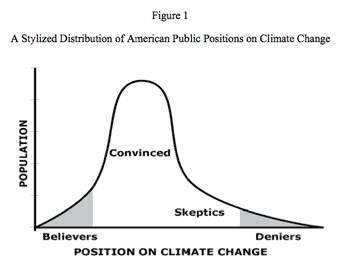
What's missing, the research says, are studies that seek to understand the cultural responses of people who question those findings. It's no surprise, after all, that a large segment of humans resist the majority opinion -- on nearly every topic.
Most skeptical writers haven't accepted the scientific underpinnings of rising temperatures, while advocates for action are promoting policies to address the findings.
See: Global Warning | The environment and national security.
See: Hoffman, Andrew J. “Talking Past Each Other? Cultural Framing of Skeptical and Convinced Logics in the Climate Change Debate.” Ann Arbor 1001 (2011): 48109.
See: Kate. (Blog). ClimateSight | Climate Science and the Public. 2011.
Kate is a B.Sc. student and aspiring climatologist from the Canadian Prairies.
She became interested in climate science several years ago, and increasingly began to notice the discrepancies between scientific and public knowledge on climate change. She started writing [ClimateScience] when she was sixteen years old, simply to keep herself sane, but she hopes she’ll be able to spread accurate information far and wide while she does so.

As I see it, there are two incommensurate stories being told about climate change. I'm not talking about the largely fake debate between those who say climate change is happening and human-driven (scientists) and those who say it isn't (the GOP).
I'm talking about two different ways of envisioning what we can expect in a climate-changed future, both of which exist among people who take climate change seriously. Sometimes they take up residence in the same head! Like, er, mine. But they don't fit together very well. One comes to us from science, the other from economics.
...Getting clear on this is ultimately going to require a lot of progress in both science and economics. But for my part, when I see scientists panicking and economists telling me not to panic ... my palms start sweating.
...We are stumbling around in the dark, in an area where scientists tell us some very, very nasty beasties dwell. In that situation, it seems to me the overwhelming bias should be toward action -- getting lean, mean, and nimble enough to handle ourselves no matter what slouches our way.
See: EPA chief faces hostile House GOP
See: Beware The Green Dragon! | Right Wing Watch
See: Energy & Commerce Committee Investigates Potential Impacts of Hydraulic Fracturing
See also: Republicans ask court to toss climate case
Grist Staff Bio

David Roberts, Staff Writer
droberts@grist.org
206.876.2020 ext. 220
David was born and raised in the South. A revelatory summer working in Yellowstone National Park convinced him that it was not the world but just the part where he lived that sucked, so he moved out West. After several wayward years spent snowboarding and getting an MA in philosophy (go griz), he woke up with nothing but a dissertation between him and an arid, cloistered life spent debating minutiae with the world's other 12 Dewey scholars. So he bailed. A period was spent trudging through the swamp of Seattle tech work, wading past Amazon.com, IMDb.com, and Microsoft, before the fine folks at Grist fell for his devastating good looks in December 2003.

For the first time, a scientific study, has linked natural gas drilling and hydraulic fracturing with a pattern of drinking water contamination so severe that some faucets can be lit on fire.
The peer-reviewed study, published today in the Proceedings of the National Academy of Sciences, stands to shape the contentious debate over whether drilling is safe and begins to fill an information gap that has made it difficult for lawmakers and the public to understand the risks...
They were alarmed by what they described as a clear correlation between drilling activity and the seepage of gas contaminants underground, a danger in itself and evidence that pathways do exist for contaminants to migrate deep within the earth.
"We certainly didn't expect to see such a strong relationship between the concentration of methane in water and the nearest gas wells. That was a real surprise," said Robert Jackson, a biology professor at Duke and one of the report's authors.
See: U.S. Congress. Committee on Space, Science, and Technology. "Hearing Highlights Lack of Objectivity in Draft EPA Fracking Study--No Evidence of Drinking Water Contamination from Fracking, Witnesses Say". May 11, 2011
Methane Fouls Water
See also: Ritter, Stephen K., and Glenn Hess. “Methane Fouls Well Water.” Chemical & Engineering News, May 16, 2011.

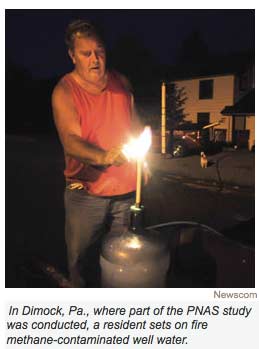
A study by Duke University researchers provides the first scientific confirmation of a link between natural gas drilling in organic-rich shale deposits and methane-contaminated residential well water. The study’s release has rekindled the debate among the oil and gas industry, environmental advocacy groups, and lawmakers over health and safety concerns about natural gas drilling methods, which are largely unregulated.
When environmental chemist Robert B. Jackson and coworkers at Duke University sampled 68 residential wells in south central New York and northeastern Pennsylvania, they found no evidence that chemicals used in hydraulic fracturing—or fracking, the most widely used drilling method to extract methane from shale beds—had percolated into drinking water, as some fear.
The scientists instead found that water wells within 1 km of active gas extraction sites had methane levels of 19.2 mg/L on average, compared with 1.1 mg/L on average in wells in inactive areas farther from drilling sites (Proc. Natl. Acad. Sci. USA, DOI: 10.1073/pnas.1100682108). The federal methane action level is 10 mg/L, above which ventilation is recommended for safety...
Full Text:

Osborn, Stephen G., Avner Vengosh, Nathaniel R. Warner, and Robert B. Jackson. “Methane contamination of drinking water accompanying gas-well drilling and hydraulic fracturing.” Proceedings of the National Academy of Sciences 108, no. 20 (May 17, 2011): 8172 -8176.


Government officials from around the world have recently declared that the risks of natural gas drilling are too great to allow it to proceed without additional analysis:
- The Town Council of Bartonville, Texas, in the Barnett Shale, voted to impose a 90-day moratorium on new permits for natural gas drilling and hydraulic fracturing in order to give the Council time to review the Town's regulations. They are particularly concerned about chemicals used in hydraulic fracturing.
- The Prime Minister of France ordered a national ban on shale oil and gas drilling until two separate government reports are published in June and there is more information available on the risks.
- The government of Quebec halted all shale gas drilling after an expert committee found that scientific data regarding the impacts of shale gas development are partial or non-existent. Quebec will be conducting its own in-depth analysis.
- The Maryland House of Delegates passed legislation that essentially halts any natiural gas drilling in the state until a two-year study on the risks is completed.
- Regarding the risks, In the second draft of a Health Impact Assessment of natural gas operations in western Colorado, public health experts concluded that: "Battlement Mesa residents will most likely be affected by chemical exposures, accidents/emergencies resulting from industry operations, and stress-related community changes." The experts provide more than 70 specific recommendations to address the potential impacts.
- And just yesterday, the City Council of Morgantown, West Virginia, passed a resolution demanding that acting Governor Tomblin convene a special legislative session to toughen regulations on natural gas drilling in the Marcellus shale field.
